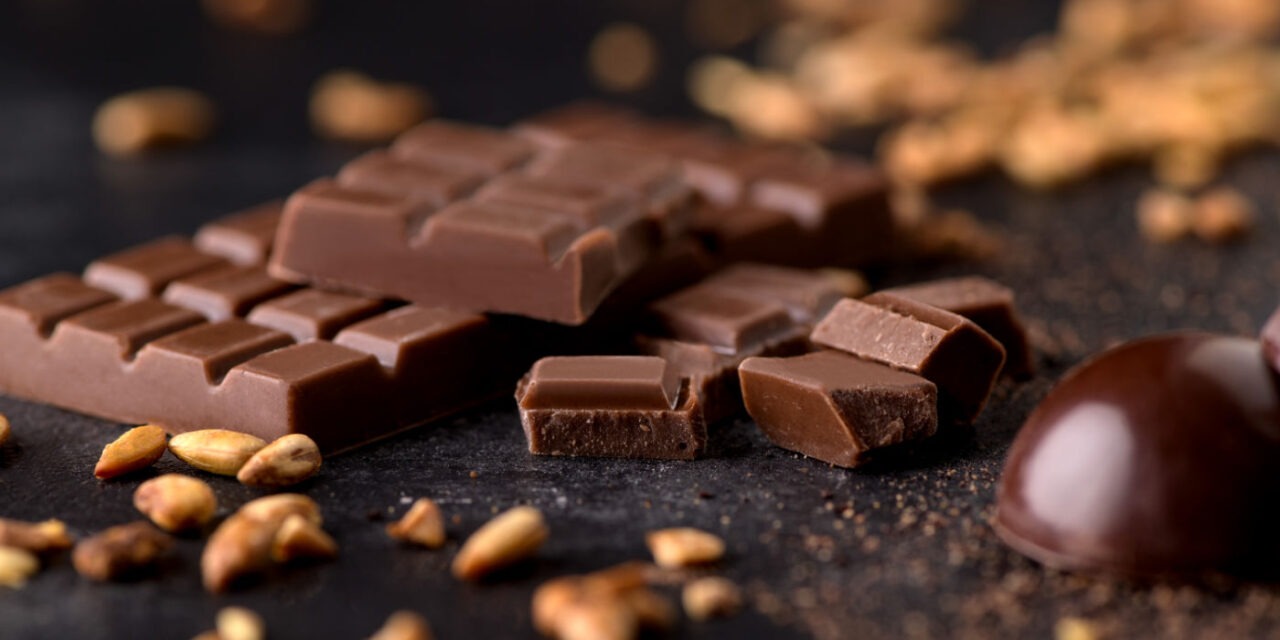
Born From Chaos
The cacao market just went through a bit of a nervous breakdown, particularly in the big chocolate world, and it now sits on the edge of a relapse. Prices hit all-time highs in 2024 and 2025 after decades of stability.
Mondelēz, one of the world’s largest confectionery companies, watched its 2025 earnings nearly halve. Hershey’s net income dropped 60 percent. These aren’t small shocks. These are companies with entire business models built on stable ingredient costs watching that stability vanish into climate-changed air.
The culprits are predictable if you’ve been paying any attention: extreme weather, climate-induced crop disease, geopolitical instability in West Africa where most cacao grows. Supply chain experts aren’t predicting a return to the normalcy everyone grew accustomed to either. Cocoa prices likely won’t return to historic low levels, and the system itself may very well be breaking.
So the confectionery industry did what it always does when faced with an existential threat: it started hedging. Enter Choviva.
ChoViva – The Sunflower Solution No One Saw Coming
In November 2025, Barry Callebaut, the world’s largest chocolate supplier and invisible hand behind nearly every commercial candy bar you’ve ever eaten, inked a deal that stopped the industry cold: a new partnership with Planet A Foods, a German food tech startup that spent years analyzing the molecular structure of chocolate, to exclusively distribute a chocolate product called ChoViva, which contains zero percent cocoa.
Yes, you read that percentage right: ZERO.
And it’s not a cheap substitute or a chemical-based, artificial mock-up (although there is a footnote we’ll touch on in a bit here). It’s a genuine attempt at replicating the chocolate experience, but from sunflower seeds.
The founders, Dr. Sara Marquart and her brother Maximilian (pictured below), realized that if chocolate flavor is mostly born from fermentation and roasting rather than from the bean itself, they could theoretically use any crop with the right chemical makeup. They tested over two hundred candidates. Grains. Agricultural byproducts. Local ingredients.
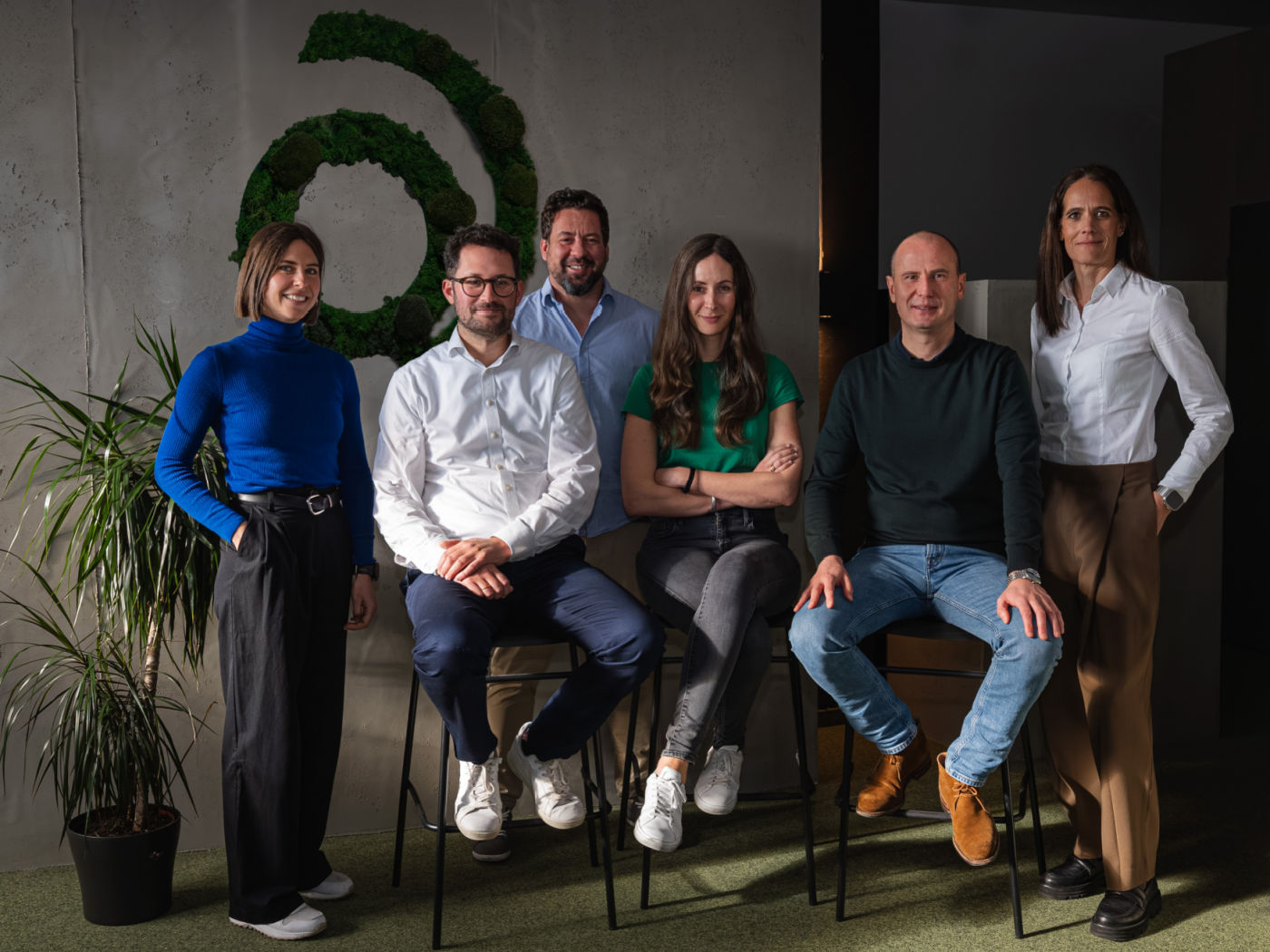
Planet A Management, left-to-right: Laura Schneider, Dr. Maximilian Marquart, Michael Hampel, Dr. Sara Marquart, Stefan Rost, Ute Schellenberg | Photo by Planet A Foods
Eventually, they landed on sunflower seeds – specifically the nutrient-dense powder left over after oil extraction.
By putting those seeds through a proprietary fermentation and roasting process (here we go again with the P word), they triggered the same chemical reactions that make chocolate taste like chocolate. The result supposedly tastes, bakes, and feels like real chocolate. There’s no weird aftertaste. No textural compromise. It’s not the chocolate substitute of yesteryear (if you’re a FRIENDS fan, it’s not Mocklate™).
For a bit of extra clarity here, Sara and Maximilian invented ChoViva back in 2021 (under the name NoCoa), and it first went to market in 2022 before undergoing a name change in late 2023. It’s existed on a small scale in Germany for a few years now.
Right out the gate, ChoViva delivers obvious economic appeal. It’s price-stable because sunflowers grow globally and don’t depend on a handful of equatorial regions.
So Barry Callebaut is certainly embracing that part of the equation, while also clearly not trying to flat out replace traditional chocolate – they love chocolate and always will.
Instead, they’re offering their massive corporate customers (the brands on your big grocery chain shelves) a financial buffer. When cocoa prices spike 40 percent in a single month, those brands can blend in ChoViva and protect their margins (more on this later in “The Bad”).
The Good: Positive Environmental Impact
As unexcited as I am about the margin-protecting prospect, there is indeed something more profound happening here that does deserve attention. Sunflowers are resilient, water-efficient crops that thrive across temperate zones.
Planet A Foods sources primarily from Eastern Europe – Bulgaria, for instance – which means the entire supply chain stays regional. No long-distance ocean shipping from equatorial ports. No tropical deforestation. No complex human rights issues embedded in traditional cocoa supply chains, where low farmer wages and child labor continue to persist as stubborn, systemic problems for decades now.
The carbon math is stark. Life-cycle assessments show ChoViva reduces CO2 emissions by 82 to 91 percent compared to traditional chocolate. For once, the benefits aren’t marketing hyperbole, they’re truly legit. There’s no denying that we need new answers to these questions about the chocolate supply chain, and to that extent, ChoViva offers an answer that in some ways is better than any we’ve heard before.
The Bad: ChoViva Is Largely About Protecting Profits
When Nestlé Germany announced its decision to incorporate ChoViva into its Choco Crossies “Snack Vibes” line earlier this year, they weren’t just chasing market trends. They made a supply chain decision that simultaneously solved price volatility, ensured predictable sourcing, and obliterated the environmental cost of the product.
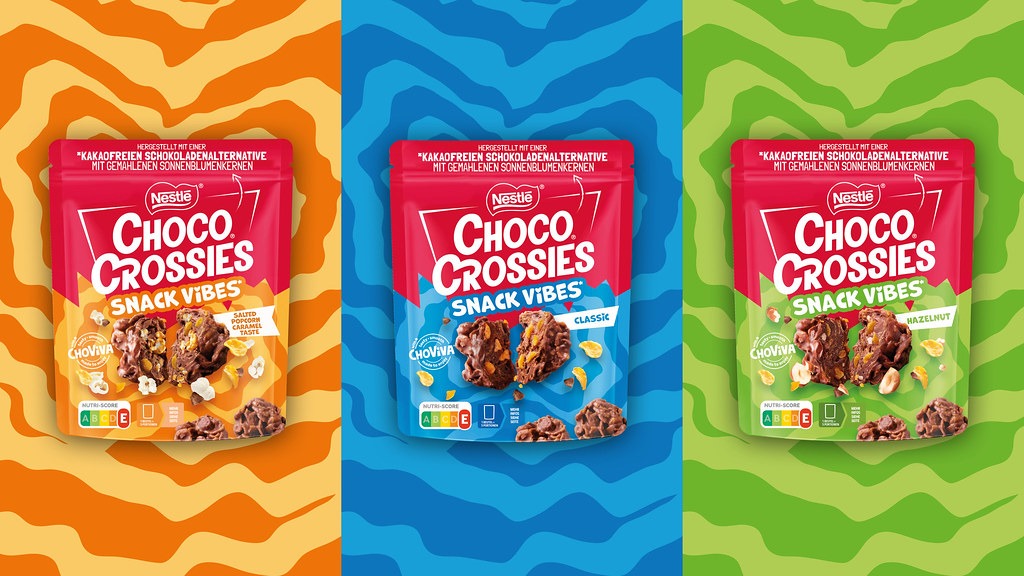
ChoViva Featured in Nestlé Choco Crossies| Photo by Planet A Foods
There’s an unease in there because we’re still talking about entities that only truly answer to the almighty dollar, but what makes this feel genuinely significant is the velocity at which it’s scaling. Planet A Foods expanded its Czech facility from 2,000 tons of annual capacity to 15,000 tons, a 650 percent increase. ChoViva already sells in over 120 products across ten countries.
Major brands like Griesson – de Beukelaer and Jokolade already ship popular products with it. Now, with Barry Callebaut and Planet A Foods signing the long-term partnership, in industrial food language this means they’re committed to ChoViva as infrastructure, not simply experimentation.
The confectionery industry learned something crucial during the cocoa crisis: you can’t take your supply chains for granted. Climate change isn’t some future problem – it’s reshaping ingredient availability right now. The companies that recognize this early and build alternatives aren’t being noble, they’re simply being pragmatic and building resilience. Then there’s these two words that truly summarize this angle: protecting profits.
We can sugarcoat this from multiple directions, but the bottom line here is that huge chocolate companies would love a way to get their chocolate consumers to accept a cheaper, more stable substitute and just keep cashing those checks, regardless of cacao market fluctuations. Granted, we’re talking about CANDY here, not the chocolate that we spend most of our time on here at Chocolate Connoisseur, but it’s still important due to its potentially far-reaching impact.
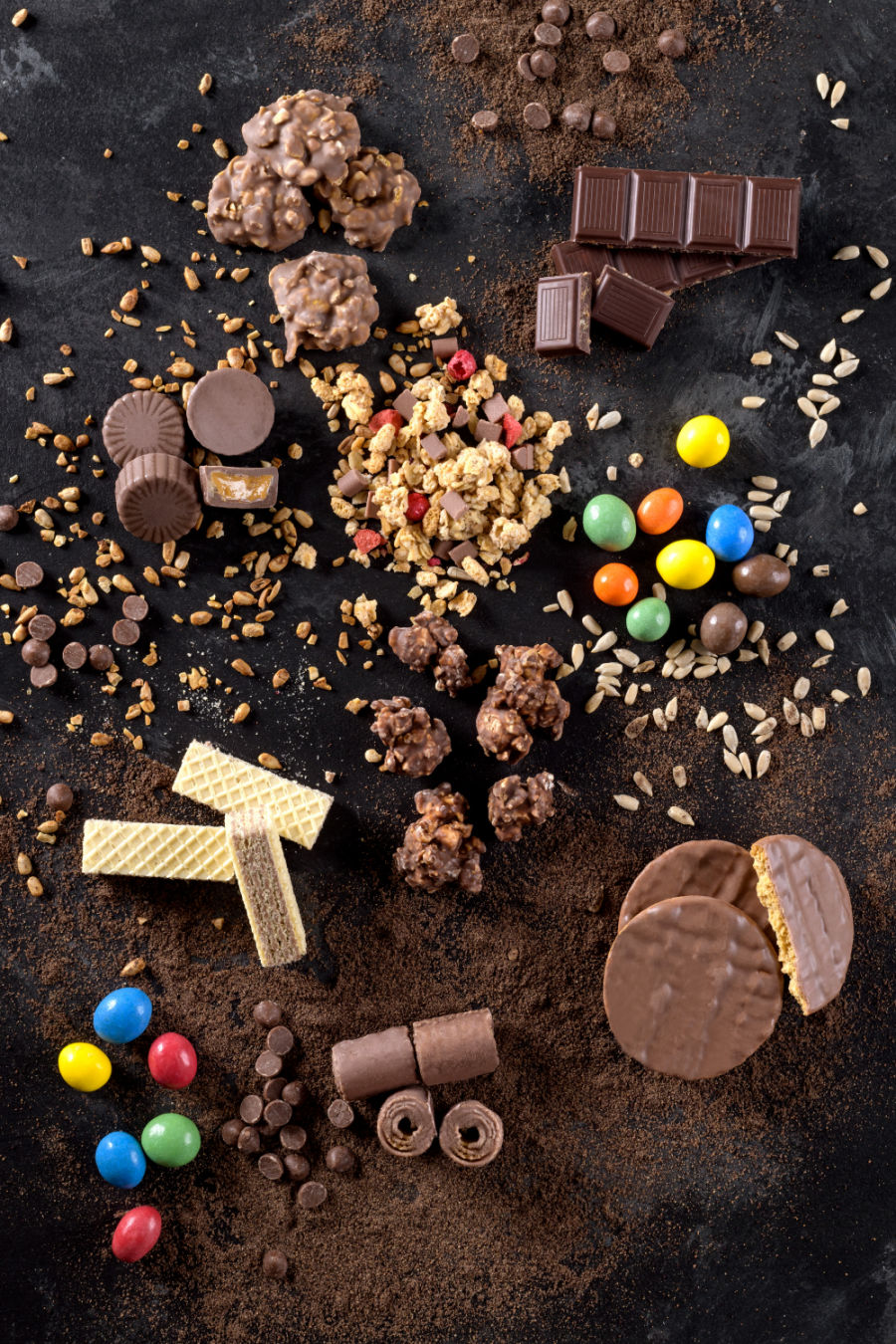
ChoViva Products Currently on the Market | Photo by Planet A Foods, Daniel Schvarcz
The GMO Adjacent
Finally, it wouldn’t be a potential chocolate replacement story without a little extra controversy stirred in for good measure.
It almost snuck past me, the GMO portion of ChoViva. Much time spent digging into the GMO controversy over at Change the World Films, however, triggered a tripwire at the last moment before I published this article. ChoViva is GMO adjacent.
Technically, it is not a GMO product, so let’s take a look at what the term GMO adjacent means here and how it may affect perception of the brand.
ChoViva uses precision gene editing (CRISPR) to modify a Yarrowia lipolytica yeast strain so it can produce a fat molecularly identical to cocoa butter. This yeast is a processing aid, so it doesn’t remain in the final product, but it is genetically modified. Isolating genes was all part of the research and trial and error Planet A performed to reach the desired flavor profile for ChoViva in the first place.
The gene editing isn’t applied to a sunflower crop or anything along those lines, and it does not technically create a GMO chocolate bar. Instead, it’s a precision tool used behind the scenes to recreate the chemistry normally produced during cacao fermentation.
It’s a small but significant detail that underscores how much of ChoViva’s innovation happens at the molecular level rather than the agricultural one.
So if you avoid GMO ingredients entirely, you may want to steer clear of ChoViva for that reason alone. I do tend to follow this philosophy, although I will try GMO adjacent products to see if I like them and, most importantly, to see if I experience any negative physical effects – which unfortunately happens more often than not (yes, I’m looking at you, Impossible products).
Still, if we look at this pragmatically, the GMO part of the process is in the stage similar to how enzymes or cultures are used in everyday foods like beer, cheese, or even plant‑based dairy. It’s certainly not at the level of corn and soy, two crops with extensive damage to their reputations courtesy of Monsanto (Bayer) pushing profits over anything else. It’s important to know, but to each their own.
Our Bottom Line on ChoViva
Here’s what genuinely surprised me while researching this: nobody needed ChoViva five years ago (even though Planet A was fast at work on creating it). The cocoa market was stable, predictable, and cheap. We tend to more readily embrace innovation when the old system breaks, not when it’s working fine.
A sunflower-based chocolate alternative now exists not just because someone had a romantic vision of sustainable ingredients (though that helped), but because the entire cocoa market started flipping upside down. Necessity didn’t invent ChoViva, but it is most definitely what’s scaling it globally even as you read this.
Barry Callebaut didn’t partner with Planet A Foods because they wanted to win a sustainability award. They did it because their customers’ profit margins were being decimated, and they needed a product that worked… one that could readily restore profits.
While in the big chocolate world, chocolate you eat next year might taste identical to the chocolate you ate last year, but the supply chain behind it might be fundamentally different – less volatile, less damaging, less dependent on equatorial regions already fragile from climate stress.
And you’ll likely never notice the difference because ChoViva was engineered not to feel like a compromise. It’s because of this flavor commitment that ChoViva’s gradual adoption over the past few years is now receiving some Callebaut rocket fuel.
The impact will most certainly start to be felt on a larger scale. It’s not that big chocolate is completely changing, however, it’s just that the system supporting it may be quietly reorganizing itself behind the scenes, one sunflower seed at a time.
SOURCES
- South Florida Reporter
“Why Big Chocolate Is Betting on a Seed to Save Your Sweet Tooth,” South Florida Reporter. - Food Ingredients First
“Nestlé Partners with Planet A Foods to Launch ChoViva Cocoa‑Free Chocolate,” Food Ingredients First. - Chemical & Engineering News (C&EN)
Alex Scott, “Planet A Foods Takes the Cocoa Out of Chocolate,” Chemical & Engineering News. - ChoViva Website
https://choviva.com/
ChoViva Bar Featured Image Photo by Planet A Foods, Daniel Schvarcz