
In Focus: TUCSON Chocolate FACTORY
Deep in the Heart of Tucson
Covering Tucson Chocolate Factory (TCF) as our first In Focus feature since returning from hiatus led to a very, very special Arizona experience for me here at Chocolate Connoisseur Magazine. It all started with a motorcycle ride down to Tucson from Phoenix.
The trip began with a gorgeous early morning jaunt via the scenic back road between the Valley of the Sun and its neighbor down south. That journey ended in Tucson’s Historic Fourth Avenue neighborhood, new home to Tucson Chocolate Factory as of March 2026.
TCF may be new to the location, but it feels like it’s been an integral part of this legendary street forever. With neighbors like the super eclectic 4th Avenue Deli (the vegan hot dog selection is ridiculous) and also Del Sol, a Tucson staple since 1991, whose red brick facade welcomes patrons in to browse everything from apparel to pottery, this neighborhood delivers.
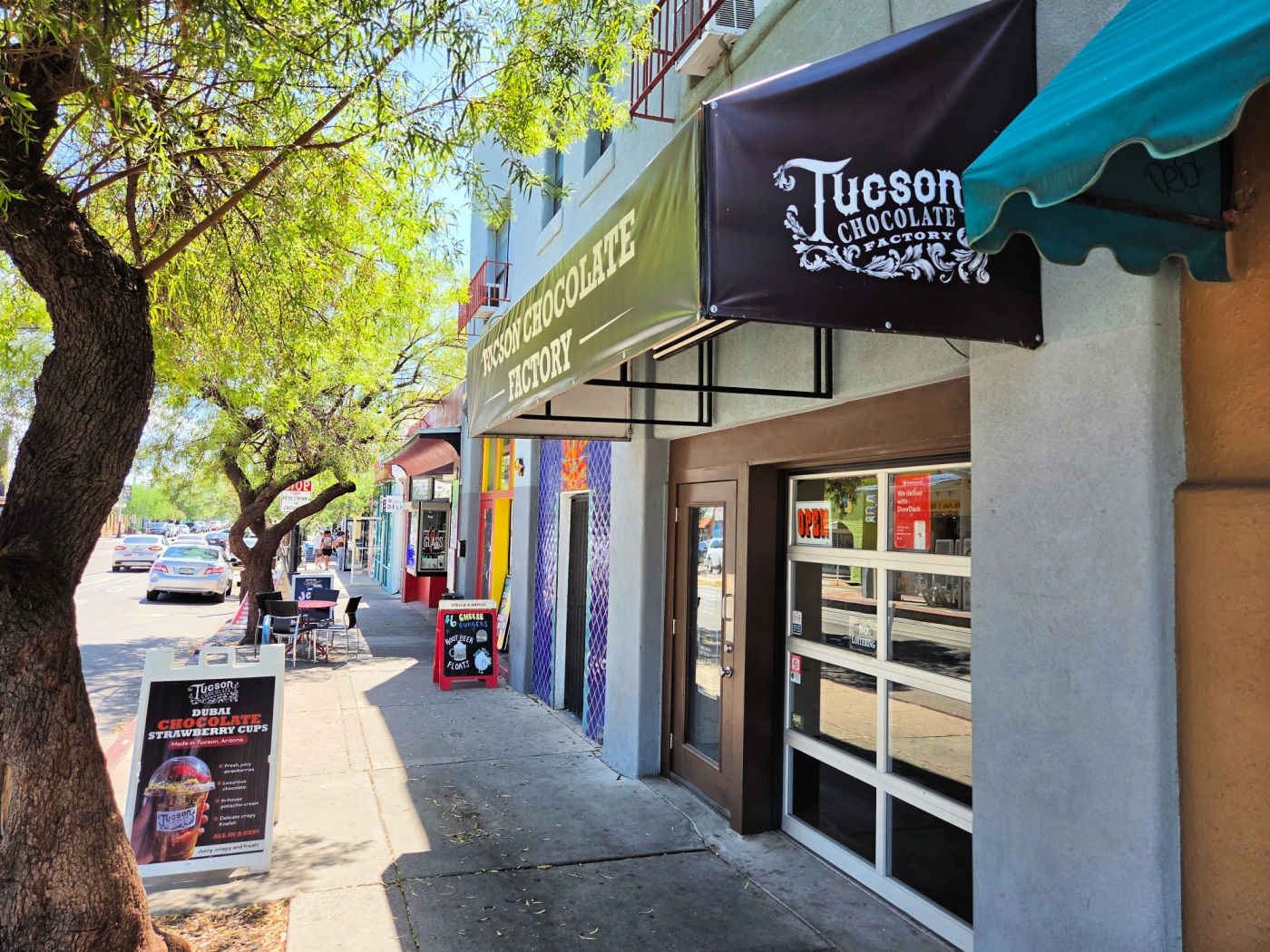
Nestled into Tucson’s Historic Fourth Avenue neighborhood
Duck into either one of these stops and guess what your most logical next step is? Of course I’m biased, but for me it’s chocolate – a perfect location.
As I park and prep to walk in for my first in-person meeting with owner and chocolate maker Armando Bezies, the Sun Link Streetcar passes by, right in the center of 4th Avenue. This modern streetcar, which connects the Fourth Avenue neighborhood to Downtown and more, symbolizes one of the best parts of Tucson… an interconnectedness and community that bonds this smaller city together, in ways that its three-times larger sister city up north often finds difficult to replicate.
Walking into the already busy shop on a late summer Saturday really hits home the magic of this place… and the outstanding work Armando puts in to make it all flow. The community is here, and it’s happy, right smack dab in the heart of Tucson.
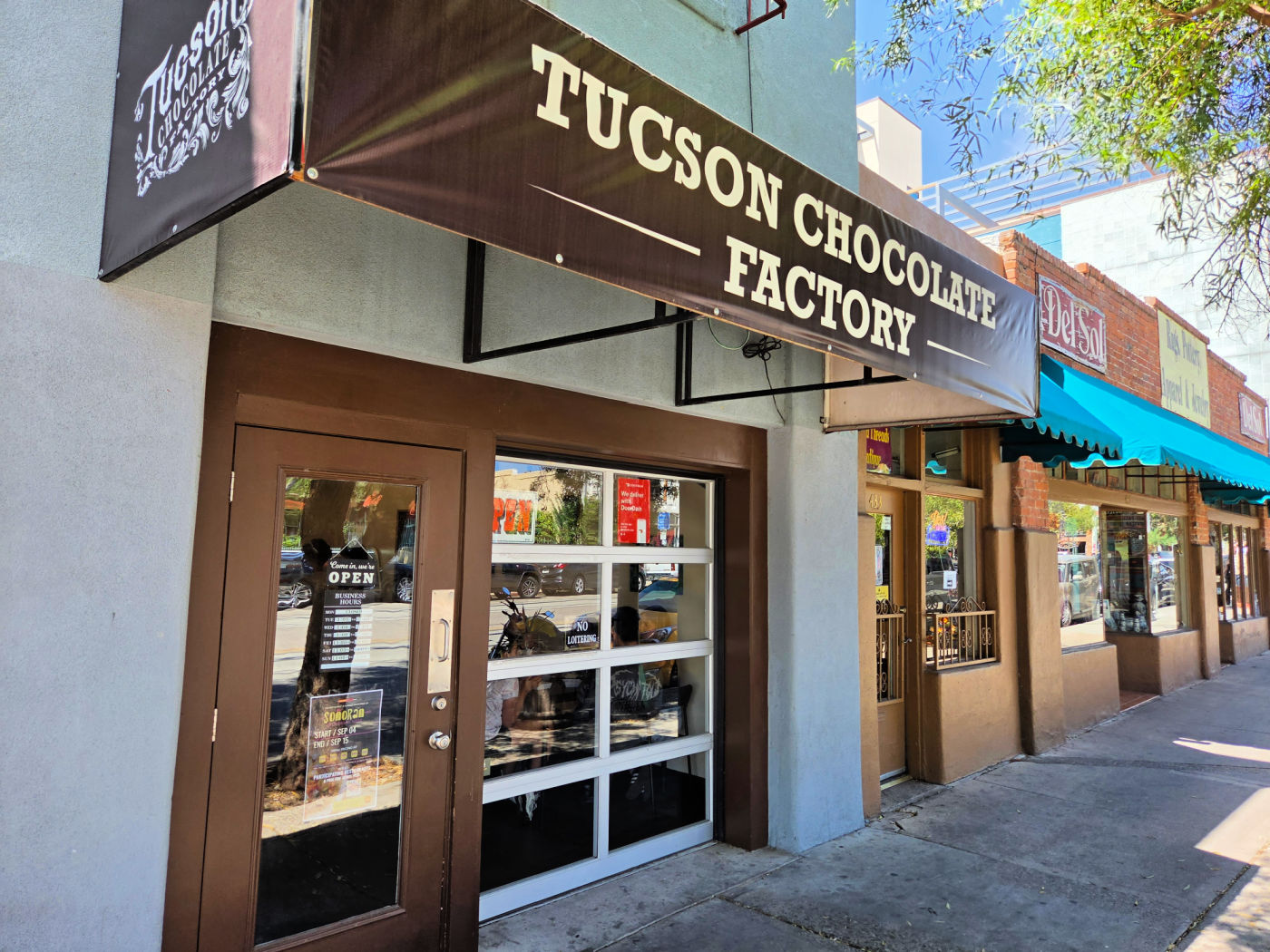
Southwestern Roots
Although Armando was born in Hermosillo, in Sonora, Mexico, he spent most of his childhood here in Tucson, where chocolate existed as a big part of the Mexican culture surrounding him. Whether a cup of hot chocolate (which he ironically never liked) or just a bar, chocolate stood ever present.
Despite that early exposure, however, no childhood chocolate memory triggers nostalgia, and no youthful epiphany ever sparked the thought that chocolate may one day become his life’s work. As Armando honestly puts it –
“Chocolate was just always there, and I never thought twice about it. I came back to chocolate much later in life from the completely different direction of learning how to make things.”
Indeed, despite all the early exposure to the wonderful world of chocolate at a young age, the beginning of Armando’s true chocolate journey still sat decades away…
Phoenix Rising – a Slow Burn
In the years before Armando’s unique chocolate pivot – much more of a slow burn than an a-ha moment – he didn’t even live in Tucson. He lived up in Phoenix, working a solid career in finance for nearly two decades. As we’ve seen before in some great chocolate makers, a “past life” often holds little relevance to the chocolate future just around the corner.
Armando elaborates –
“There really wasn’t anything in my career that pointed toward becoming a chocolate maker. It was a completely different world. When the pandemic happened, I started spending a lot more time cooking and experimenting with food at home. I became interested in making things I’d never made before, and one of those things was caramel.
I started making little caramel candies and wrapping them individually by hand. Eventually I started selling them. But after making them for a while, I kept feeling like they needed something else. Turned out chocolate was the answer.”
At first, simply dipping the caramels in chocolate served as the perfect enhancement. He then graduated to using molds, giving the chocolate caramels more interesting, unique shapes.
That experimentation soon turned into making bonbons, and shortly after that, Armando realized he yearned to know more about the chocolate –
“It led me backward through the entire process. Instead of just asking what I could make with chocolate, I became interested in the chocolate itself. Then the cacao bean. Then where the cacao came from, how it was fermented and roasted, and how all those things affected what I was tasting.
There wasn’t really a moment where I decided, “I’m going to become a chocolate maker.” One thing just kept leading to the next.”
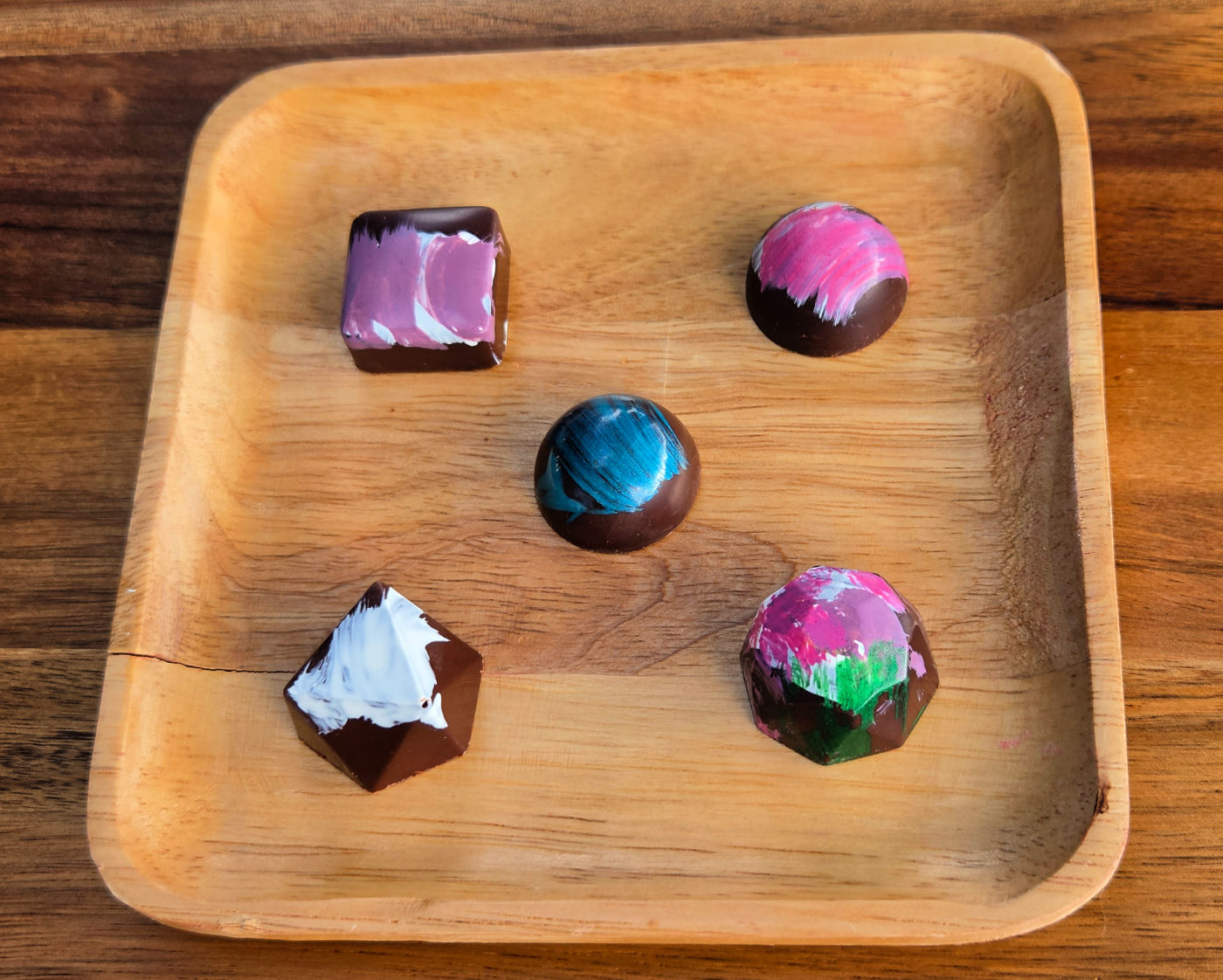
Bon bons soon led to bean-to-bar chocolate bars too
In yet another similar refrain from budding chocolate makers with a deeply inquisitive nature, Armando learned chocolate making via YouTube videos, coupled with “lots and lots of trial and error.” That included plenty of over-roasted and under-roasted batches, as over time he kept refining the process, bit by bit, especially with single origin bars.
Tucson Chocolate Factory Begins…
With the initial growing pains in the rearview, Armando started Tucson Chocolate Factory in early 2022, working to launch it via local farmers markets. He and his wife Denise worked together to both create and package the chocolate, prepping for whichever weekly events were on the docket.
“Our first market was in the middle of June, probably not the most logical time to launch a chocolate business in Tucson! The first thing we had to learn was how to keep the chocolate from melting in the middle of the day, which led to inventing clever ways to transport it during the hot summer.”
From 2022 through 2024, Armando and Denise mostly kept that pace, selling at farmers markets and lining up some wholesale orders too.
The First Market-Driven Pivot, As Awards Roll In
Around the middle of 2024, Tucson Chocolate Factory kept receiving calls from people asking for one very specific thing – Dubai chocolate bars. The trend had kicked in full swing, and initially Armando really wanted no part of it. Spending so much time learning the craft, appreciating the subtleties of the origins he’d grown to love, pivoting to Dubai chocolate bars felt a bit disingenuous.
Then one day, on a call from yet another customer asking for Dubai bars, he finally decided he’d give it a go. Understand though, Armando had no intention of simply copying a trend or chasing a fad. He dove deep, visiting local Middle Eastern restaurants and learning exactly how they prepared the kataifi and kunafah fillings.
He adapted those traditional methods into what would soon become Tucson Chocolate Factory’s signature classic pistachio Dubai chocolate bar, and the results were by no means subtle.
“We went viral. People began seeking us out at farmers markets and other events specifically for the Dubai bars, and we started selling them online as well.
Then we had an opportunity to sell the bars at Bella’s Gelato in Tucson. That gave us the chance to sell our product every day in a retail environment. Around that same time, Strawberry Dubai Cups became the next evolution of Dubai for us, and we began offering those too. The Tucson community helped us reach our next stage and TCF grew!”
They also started developing vegan versions of the Dubai bars, and those even took off, eventually growing into a special vegan menu that Tucson Chocolate Factory offers once a quarter, selling at a local vegan event.
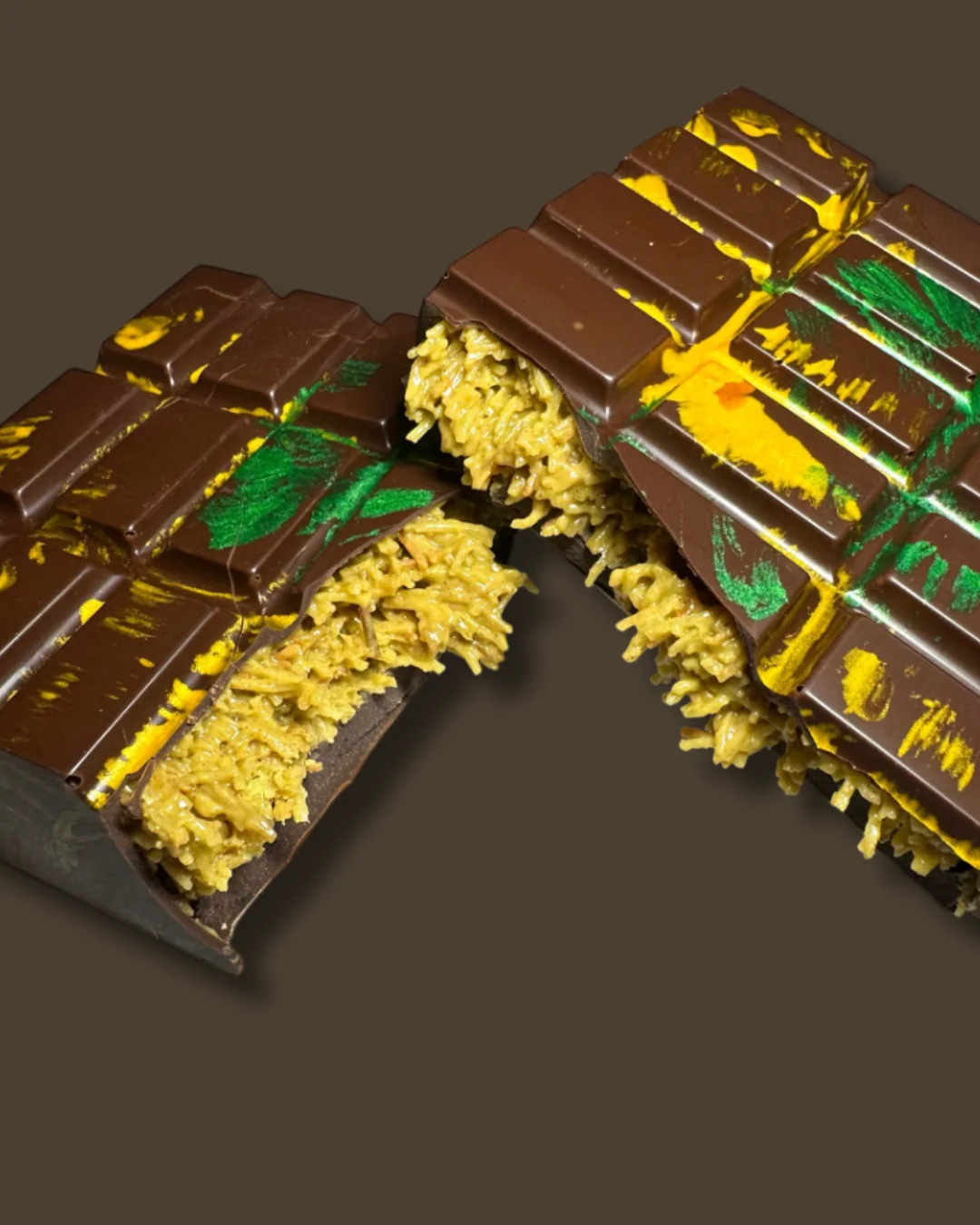
Tucson Chocolate Factory’s Dubai Chocolate Bar (photo by TCF)
Pivoting to the Dubai chocolate, and boosting the business thanks to the viral wave it produced, was at no point going to pull Armando away from his true chocolate passion, however.
As the Dubai craze buoyed the business, TCF continued developing their single origin chocolate, expanding into new origins and continually working to refine each bar. With his craft properly honed, and the single origin chocolate bars sufficiently upgraded, Tucson Chocolate Factory took the next logical step – competing for awards.
The first one, a Silver at the 2024 International Chocolate Awards – Americas, graced TCF’s Alto Beni 70% Bar (Bolivia). They picked up three more awards came at the 2025 Americas as well, coupled with scoring a silver and a bronze at the 2025 World Finals for two of the three bars that advanced.
This year, Tucson Chocolate Factory went next level, competing in the 2026 International Chocolate Awards. Let me clarify what I mean by competing, however, they won five medals!
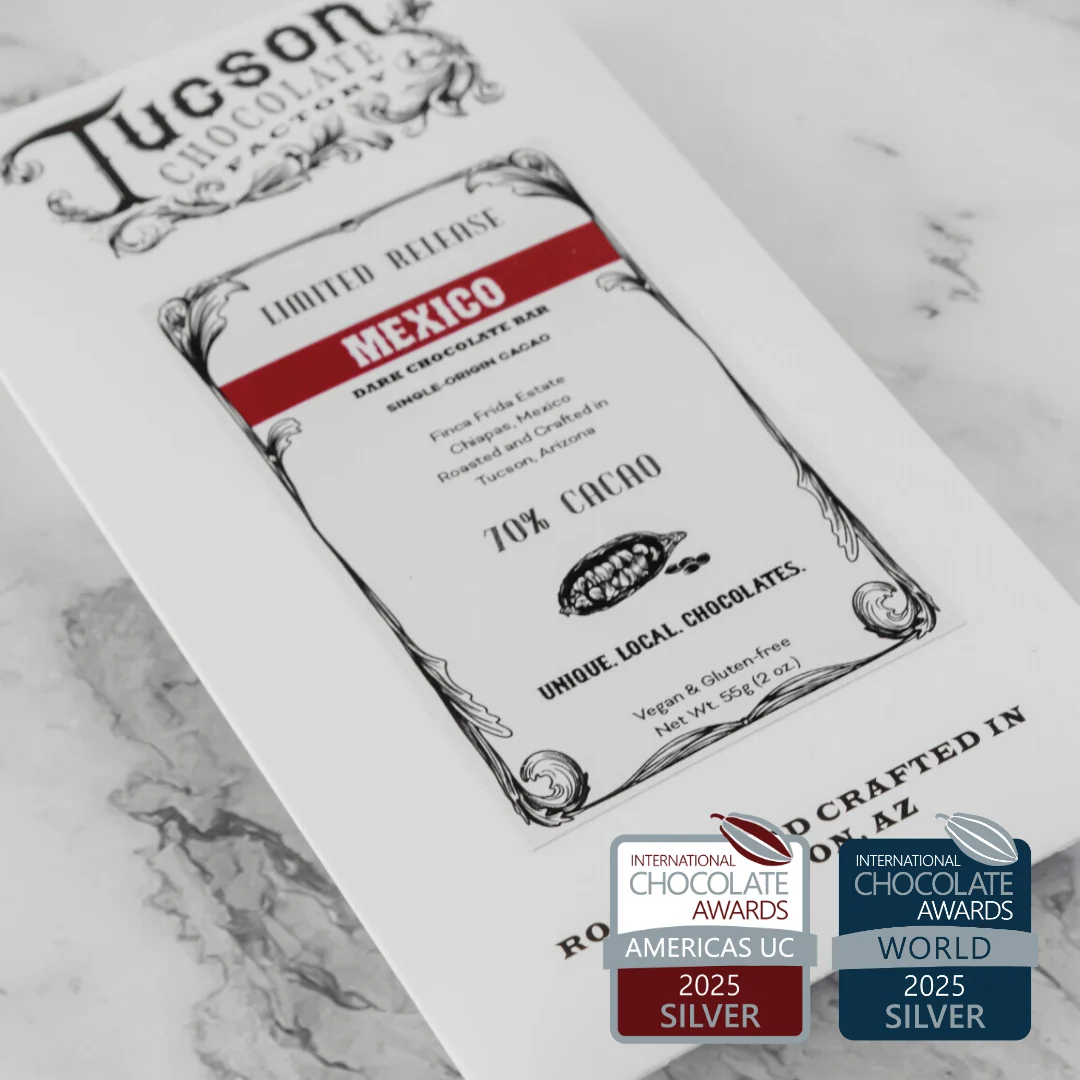
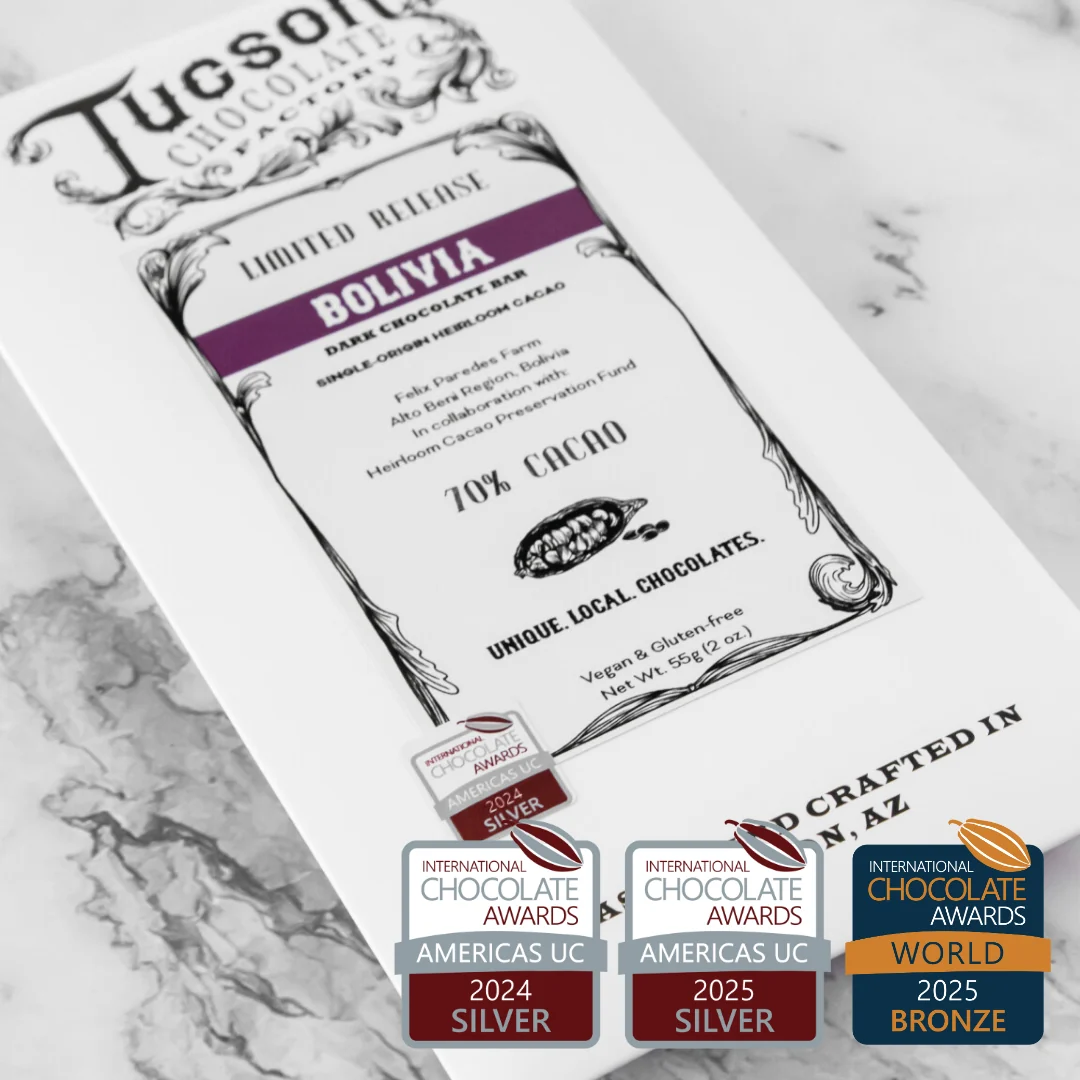
Two of Tucson Chocolate Factory’s Top Award-Winning Bars (photos by TCF)
2026 International Chocolate Awards
Silver: Sierra Madre 70% (Mexico)
Silver: Las Esmeraldas 70% (Dominican Republic)
Silver: Almendra Blanca 70% (Mexico)
Bronze: Alto Beni 70% (Bolivia)
Bronze: Agua Escondida 70% (Mexico)
Impressive. Most impressive. Looking back at the last four years now, Armando reflects –
“So we went from caramels to bonbons, then into making our own chocolate from cacao, developing single origin bars, and eventually competing internationally with them.
I guess the bottom line is, I spent about twenty years doing one thing and then unexpectedly found something completely different to become obsessed with!”
Tucson Chocolate Factory: An Origins Story
Now that you know how TCF came to be, let’s take an intimate look at the very best part of it all: the chocolate, and how it’s crafted.
For Armando, it all starts with origin, and he works with cacao from several origins, including Bolivia, Mexico, and the Dominican Republic. Two origins of particular importance, however, are Alto Beni and Tranquilidad from La Paz, Bolivia – both designated as heirloom cacao (HCP) via the Heirloom Cacao Preservation Fund.
Alto Beni received HCP #1 designation back in 2014, while Tranquilidad received HCP #2, meaning they were literally the first two cacao origins in the world to receive Heirloom Designations. Armando explains why these two varieties mean so much to TCF –
“The two origins are very different from each other, which is part of what I find so interesting about cacao.
Alto Beni has deep chocolate and dark fruit characteristics, while Tranquilidad can be much more complex, with citrus, floral, spice, resinous and aged fruit notes.
We do not want to make every origin taste like the same chocolate. We want to understand what’s already there and allow those characteristics to come through.”
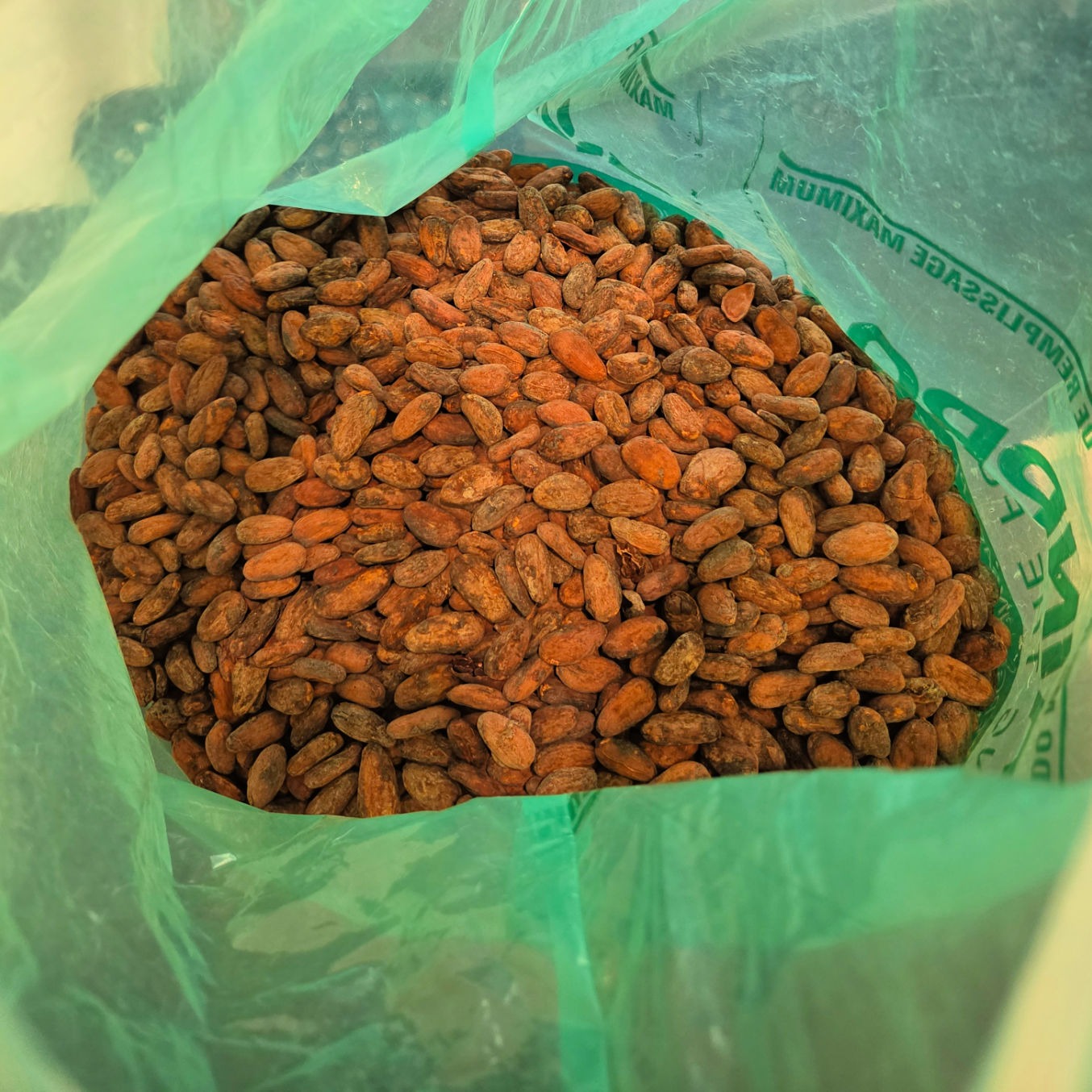
TCF’s chocolate all begins with “unroasted, fermented, and sun-dried raw cacao beans delivered straight from trusted farmer partners.”
Armando also includes the up-and-coming, oft-neglected cacao origin close to his heart: Mexican Almendra Blanca. This rare bean in Mexico, from the Finca Frida Estate in Soconusco, is a single-variety white Criollo cacao known as “Carmelo”.
Finca Frida, a family-owned coastal estate where nearly 15 hectares of cacao grow alongside mango trees, takes great care to protect their heirloom origin. Its perfect location next to the water, isolated from other farms, prevents cross-pollination, preserving Carmelo’s signature white color and purity.
Beyond caring for its cacao, Finca Frida also cares for its people. The estate participates in the “Program for People in Social or Natural Emergency” on Mexico’s southern border. This program offers employment opportunities for thousands of vulnerable migrants, from areas including Central America, Venezuela, Cuba, Haiti, and even Africa. Finca Frida hires workers for their farm and pays an equitable salary, so the workers can not only support themselves, but can potentially send funds back home to any family left behind.
Armando gently roasts the Mexican Almendra Blanca beans to preserve the lighter color and delicate flavor profile, which includes cream and coffee undertones. Naturally, it’s a perfect match for TCF’s 59% “Cafecito” Mocha Bar, beautifully blended with single-origin Mexican coffee too.
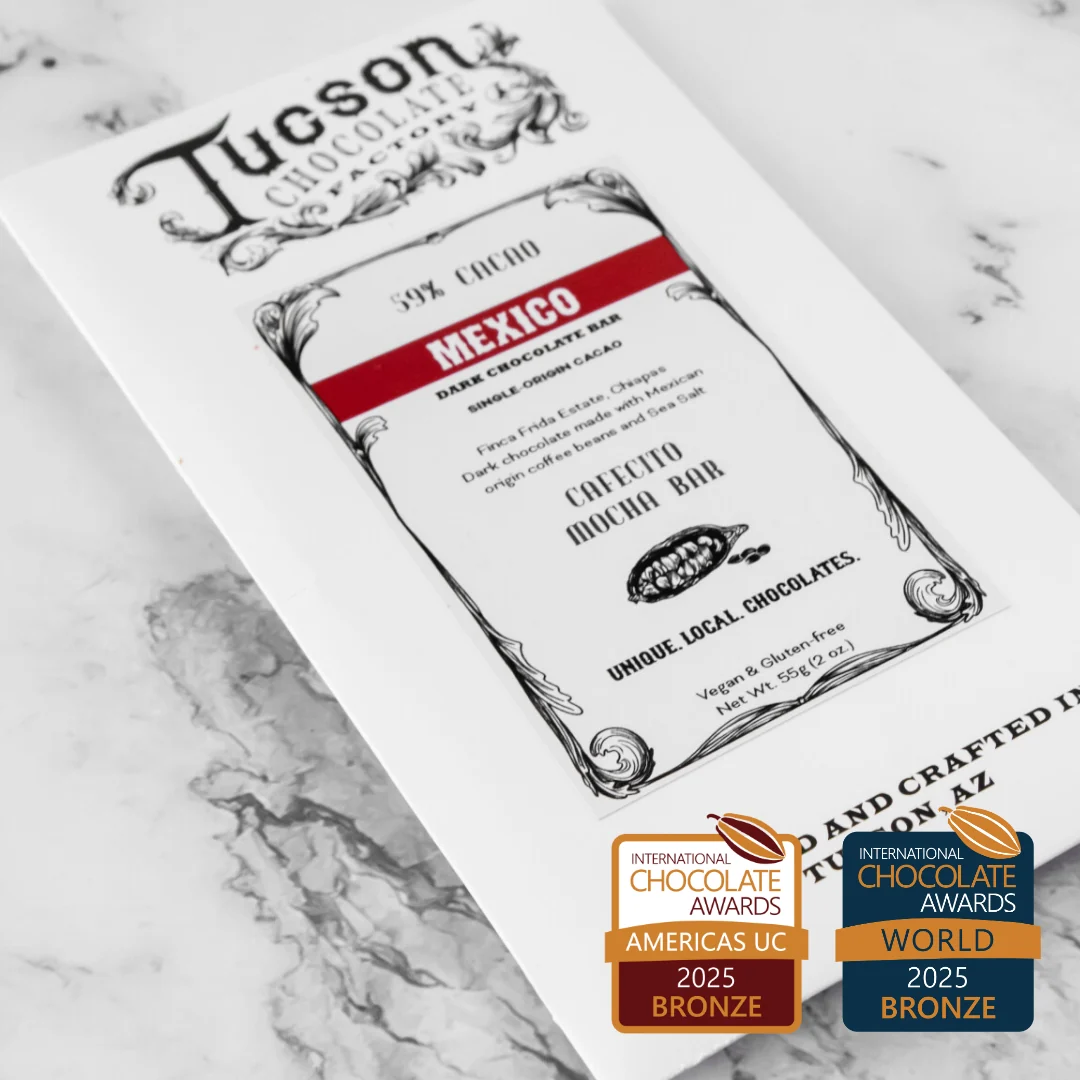
The Cafecito Mocha Bar (photo by TCF)
So Much Great Chocolate
Armando’s willingness to embrace what his Tucson audience asks for truly changed the trajectory of Tucson Chocolate Factory. As a result, you’ll see things when you walk into the shop that you likely won’t find at many other bean-to-bar chocolate shops – all part of TCF’s charm.
Their Dubai chocolate products are still best sellers, both the classic pistachio Dubai chocolate bar people initially sought out, the Strawberry Dubai Cup too.
The newest “catch the wave” item, however, TCF’s trompe l’oeil mousse pastry. These fruit shaped mousse cakes blew up on Instagram in Tucson over the spring and summer, and as you can see in the photo below, TCF regularly fight to even keep up with the demand!
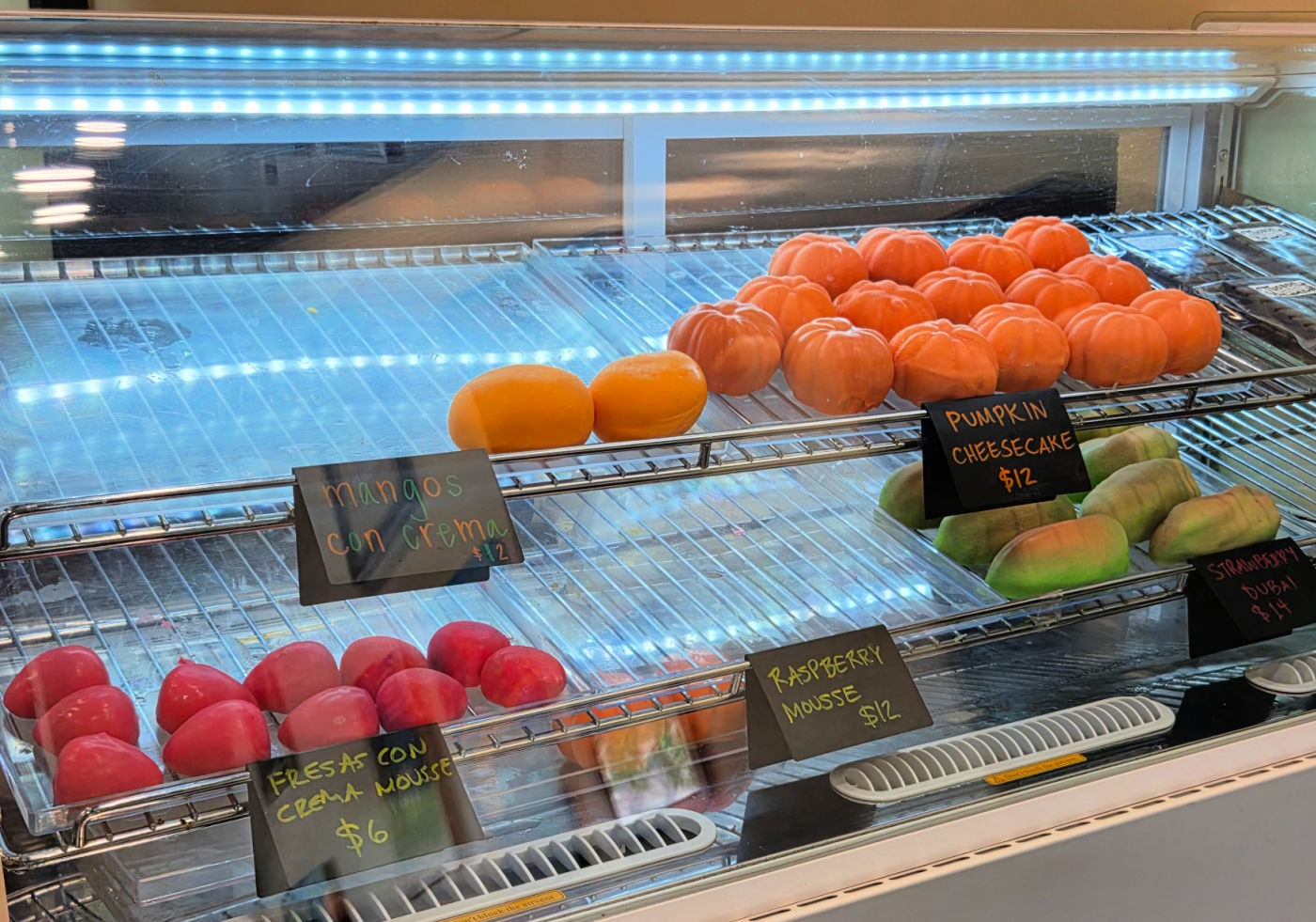
Last summer’s viral sensation, TCF’s trompe l’oeil mousse pastries
Since Armando also appreciates vegans (which gets more than an honorable mention from the one writing this article here), he offered up one of the vegan versions to yours truly on my visit – a peanut butter and jelly variety. Shaped like a blueberry, I made it a point the first night of my visit to only eat half the mousse, saving the other half for my final night in Tucson.
Sadly that plan failed miserably, because the mousse was so delicious it went down in one sitting with zero chance for survival. I can see why Tucson Chocolate Factory finds so much success when courting vegans. Here’s Armando’s quick take on the challenges of adding vegan options –
“Our award-winning dark chocolate is vegan by nature, so vegan desserts are already built into the way we think about chocolate. I especially enjoy developing vegan desserts because they give me an opportunity to dive deeper into my craft.
Without relying on some of the traditional ingredients used in pastry, I have to think more carefully about texture, structure, fat, sweetness and flavor. That process pushes me to understand chocolate and dessert making at a deeper level.
Our vegan Dubai bars became very popular, and that eventually led us to create a special vegan menu that we offer about every three months, including vegan bars, mousse pastries and other desserts while still keeping chocolate at the center of what we do.
Then our vegan Dubai bars developed a following of their own and went viral with customers looking for vegan options.”
Tucson Chocolate Factory walks the line with a very different dynamic, courtesy of Amrando embracing what his local audience requests – and honestly, it’s just an outstanding blueprint for other chocolate makers to follow where they can.
Initially he struggled with the idea, as we mentioned before, but his chocolate philosophy evolved in a way that I truly appreciate –
“Chocolate is universal, and that gives us a lot of room to explore. We can make a single origin 70% bar where the cacao itself is the entire focus, and at the same time make something like a pistachio Dubai chocolate bar, a Saguaro Fruit Caramel or a trompe l’oeil mousse pastry. I do not see those things as being in conflict with each other. They are all different ways of working with chocolate.
Tucson Chocolate Factory has evolved over the years to serve our growing community, and I enjoy making things that are unexpected and new.”
It’s the kind of philosophy that can help keep the doors open and, in the long run, sell even more bean-to-bar chocolate.
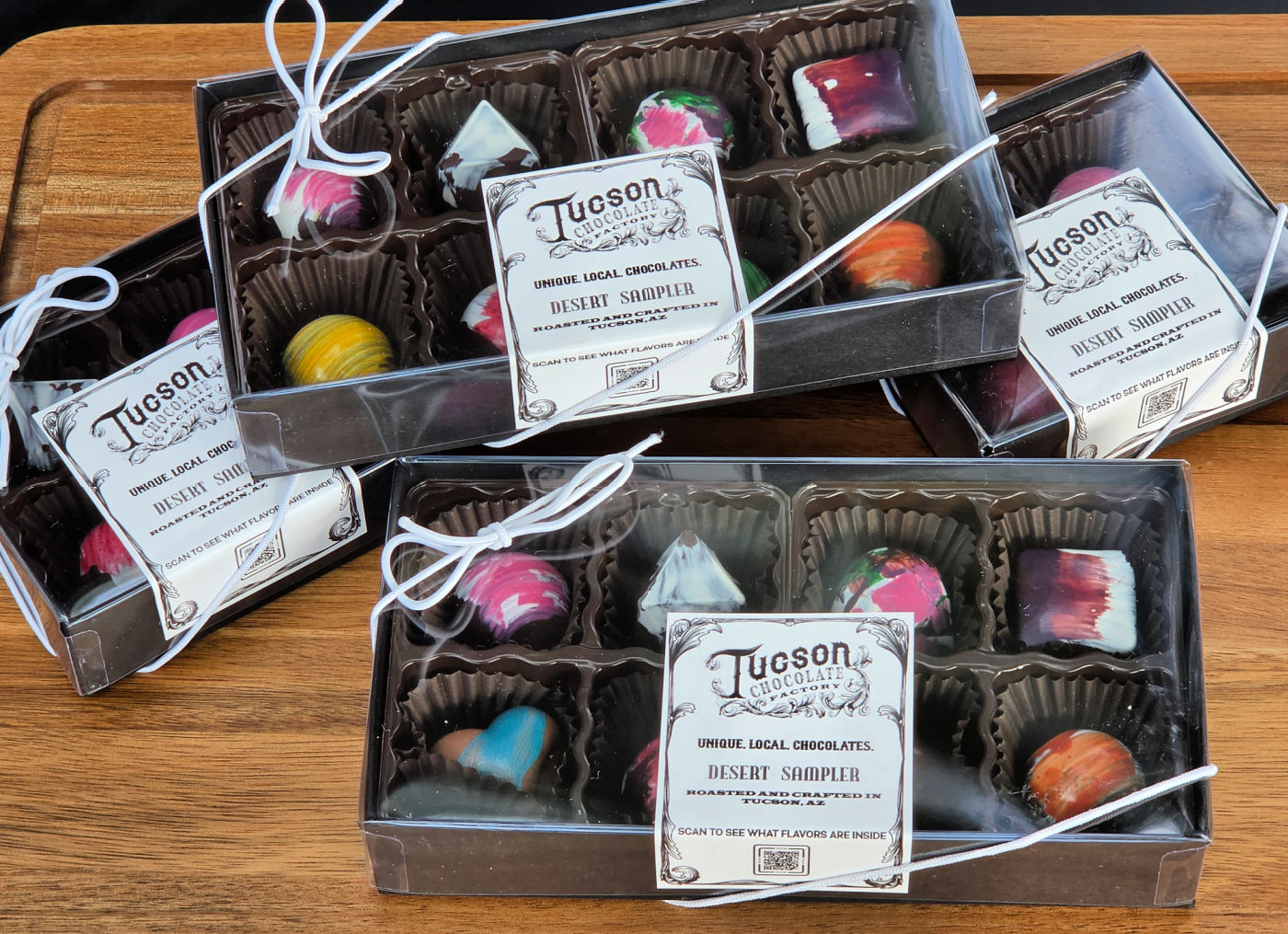
A different combination in every box
Tucson on the Menu
I couldn’t write an article on TCF with speaking about the elephant in the room: the city it calls home. To a large extent, Tucson itself makes Tucson Chocolate Factory great, as local sourcing plays an absolutely crucial role in the business.
Armando’s commitment to local is not simply lip service, nor an empty promise. He sources ingredients from local urban farms and food producers whenever possible, and as he puts it, “TCF allows the place where we live to influence what we make.”
Tucson is a UNESCO designated City of Gastronomy, and Tucson Chocolate Factory is a Certified Artisan through Tucson City of Gastronomy. It’s not something they take lightly, or as an afterthought –
“Being in a UNESCO City of Gastronomy has pushed us to look at the ingredients and food traditions around us. We source from local producers whenever we can and use ingredients such as saguaro fruit in our chocolates.
For us, that is something we try to make part of how we actually make food. When we develop something new, we look at what is growing here, what people are producing here, and how those ingredients might work with chocolate.
The business has grown alongside Tucson, and I think the place is inseparable from what Tucson Chocolate Factory has become.”
Case in point: their Saguaro Fruit Caramel. They sustainably source the saguaro fruit syrup locally from a gentleman who makes it on the Tohono O’odham reservation. It’s not an ingredient Armando selected simply because it sounded unusual – it’s something that belongs to the region.
This rare syrup is crafted from nectar of the saguaro cactus blossom, Arizona’s state flower. It’s only harvested once a year during the brief spring bloom, and its delicate floral sweetness carries hints of vanilla, citrus, and honey. Armando artfully blends it into stone-ground chocolate “for a flavor that captures the fleeting magic of a desert dawn.”
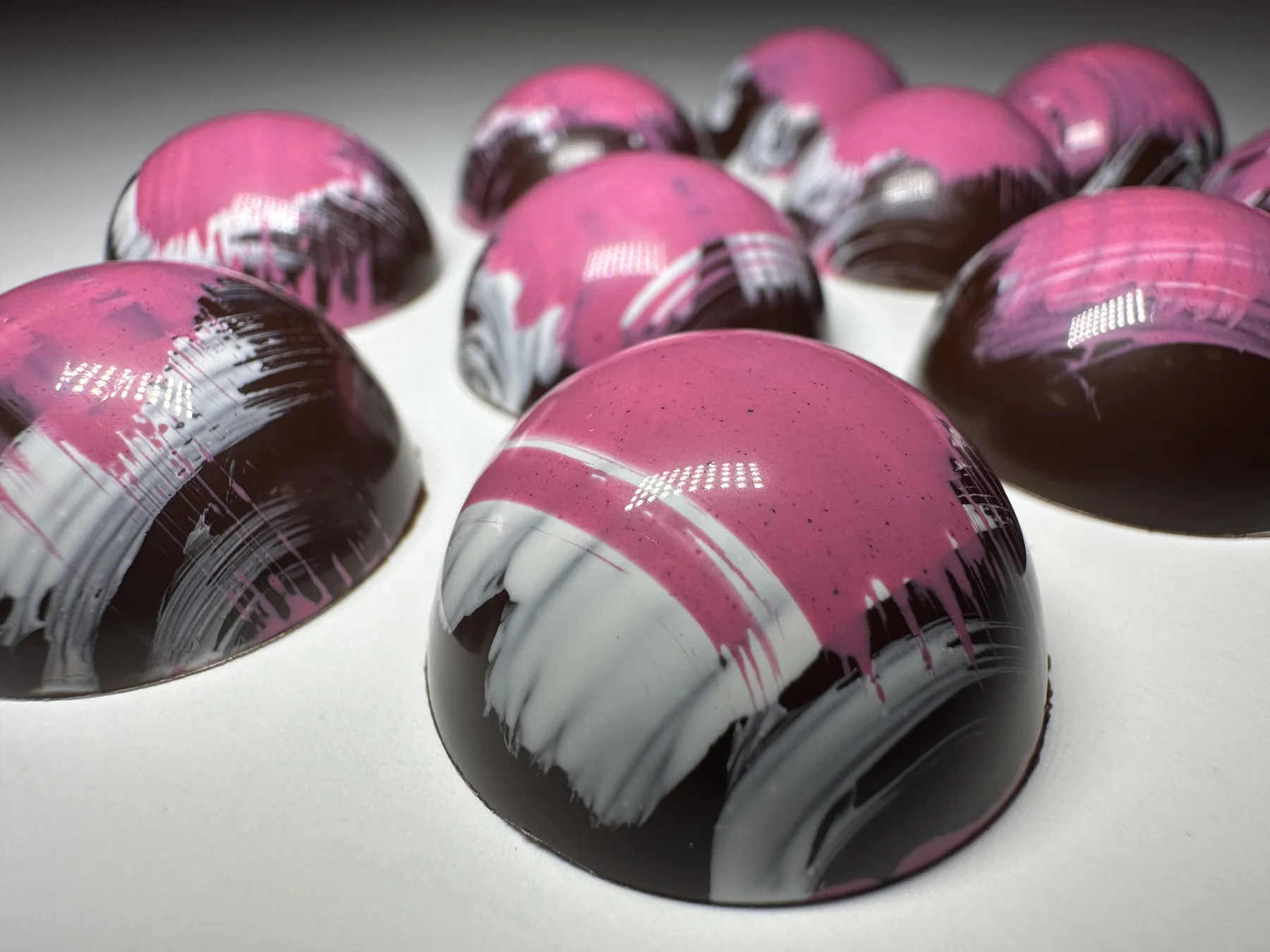
Prickly Pear Caramel Bon Bons (photo by TCF)
Another stellar desert example is Prickly Pear Fruit, harvested from wild and cultivated prickly pear cacti across the Tucson basin and surrounding ranches.
This iconic desert fruit “brings a vibrant magenta hue and a tart-sweet flavor reminiscent of watermelon and bubblegum.” Armando uses prickly pear fruit for ganache or white chocolate, delivering “a true taste of the Sonoran summer.”
Here’s one other perfect example of the Sonoran Desert: naturally-grown, wild-harvested chiltepin peppers. Hand-picked by local foragers, Armando loves to infuse pepper into ganache “for a spicy-sweet kick that honors O’odham and Yaqui culinary traditions.”
TCF also partners with Savaya Coffee, a Tucson-based micro-roaster, for the single-origin coffee beans used in their chocolate, a Tucson farm for Locally Harvested Dates, and they even source local citrus and honey as well.
“We wholeheartedly support local for so many reasons. Fresher flavor is one, because our ingredients travel blocks, not hundreds of miles – which also fuels Sustainability, because hyper-local sourcing means minimal impact combined with maximum community benefit.
Then there’s the uniqueness… the identity. These ingredients carry the taste of Tucson’s sun, soil, and spirit, the desert terroir. Plus, it’s also great to support Tucson growers, because every purchase fuels our urban food movement.”
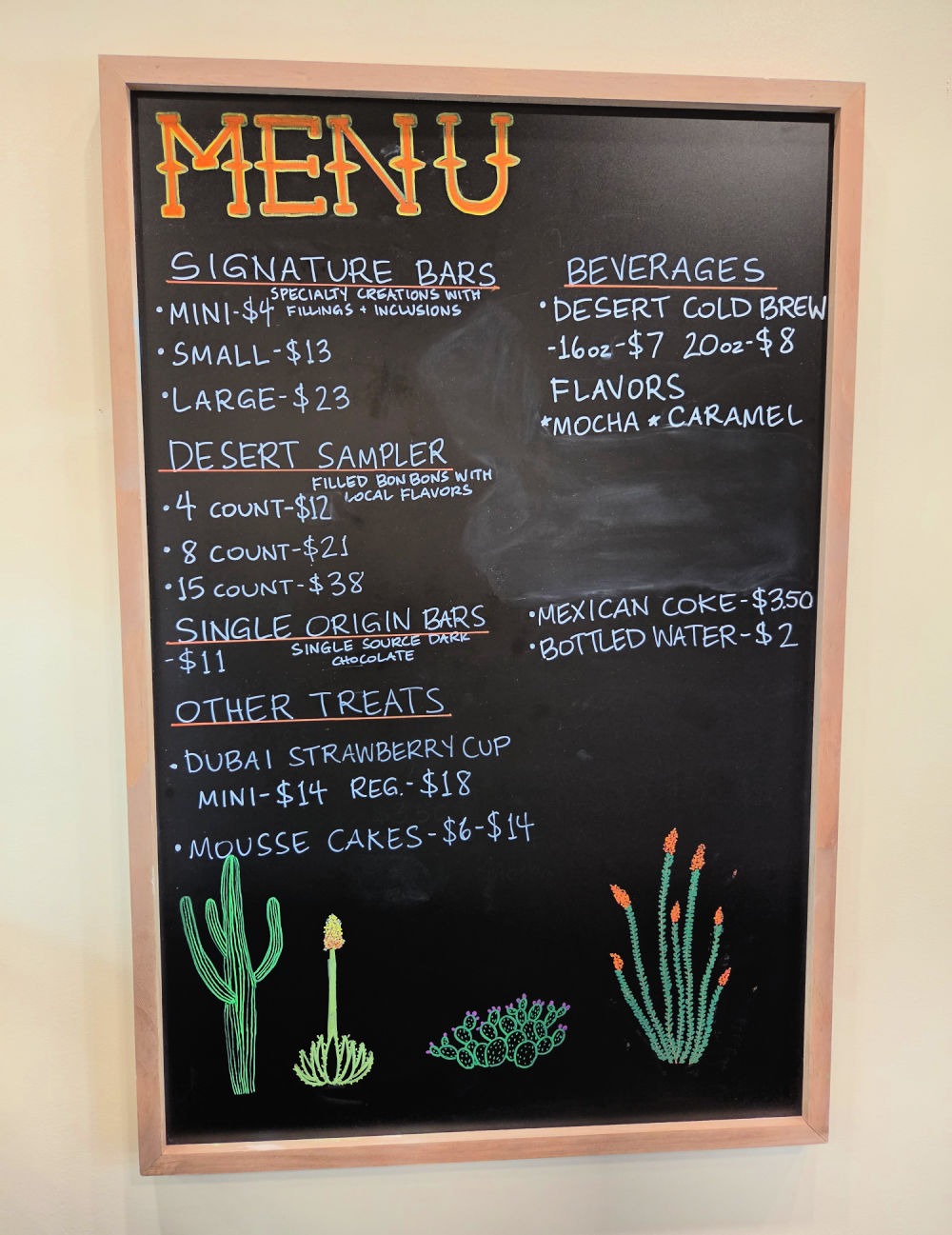
A Quick Look at the Tucson Chocolate Factory Menu Board
The Why Behind Tucson Chocolate Factory
Life as a chocolate maker is hard work, but it’s also usually a labor love. Still, the meaning behind the work can sometimes fade into the background when the daily grind grows too extreme.
I made it a point to ask Armando the all-important question for any chocolate maker, “What is your chocolate philosophy?” Here is his heartfelt response:
“Chocolate is universal, and we allow it to dictate and drive our offerings. The cacao is steering the ship. I think my job as a chocolate maker is to unleash the cacao, so to speak. I am playing a part in assisting it, removing what needs to be removed and developing what is already there so that its true potential can eventually be released in the form of chocolate.
That is why sourcing the cacao is so important to me. You cannot create something in the cacao that was not there to begin with. What I can do is try to understand it and make decisions throughout the process that allow those qualities to shine through.
Sometimes that leads to a single origin 70% bar where there is not much between you and the cacao. Other times it can lead somewhere completely unexpected.
If the cacao is grown with care, the rest follows… as long as you do not burn it!”
To stay true to this philosophy, Tucson Chocolate Factory also prefers to know the exact source of their cacao. For their Bolivian cacao, Armando works directly with the legendary Volker Lehmann (responsible for the HCP Bolivian cacao we discussed earlier) and orders cacao from him specifically.
He deeply appreciates that connection and feels it’s important because cacao can easily become an anonymous ingredient by the time it reaches a chocolate maker. In this case, he knows who he’s buying it from and who’s producing it, which Armando says, “gives a better understanding of what I am working with and what each cacao has to offer.”
Finally, from a health standpoint, TCF uses non-GMO, all of their dark chocolate is gluten-free and vegan, plus Armando also makes a sugar-free chocolate, sweetened with monk fruit.
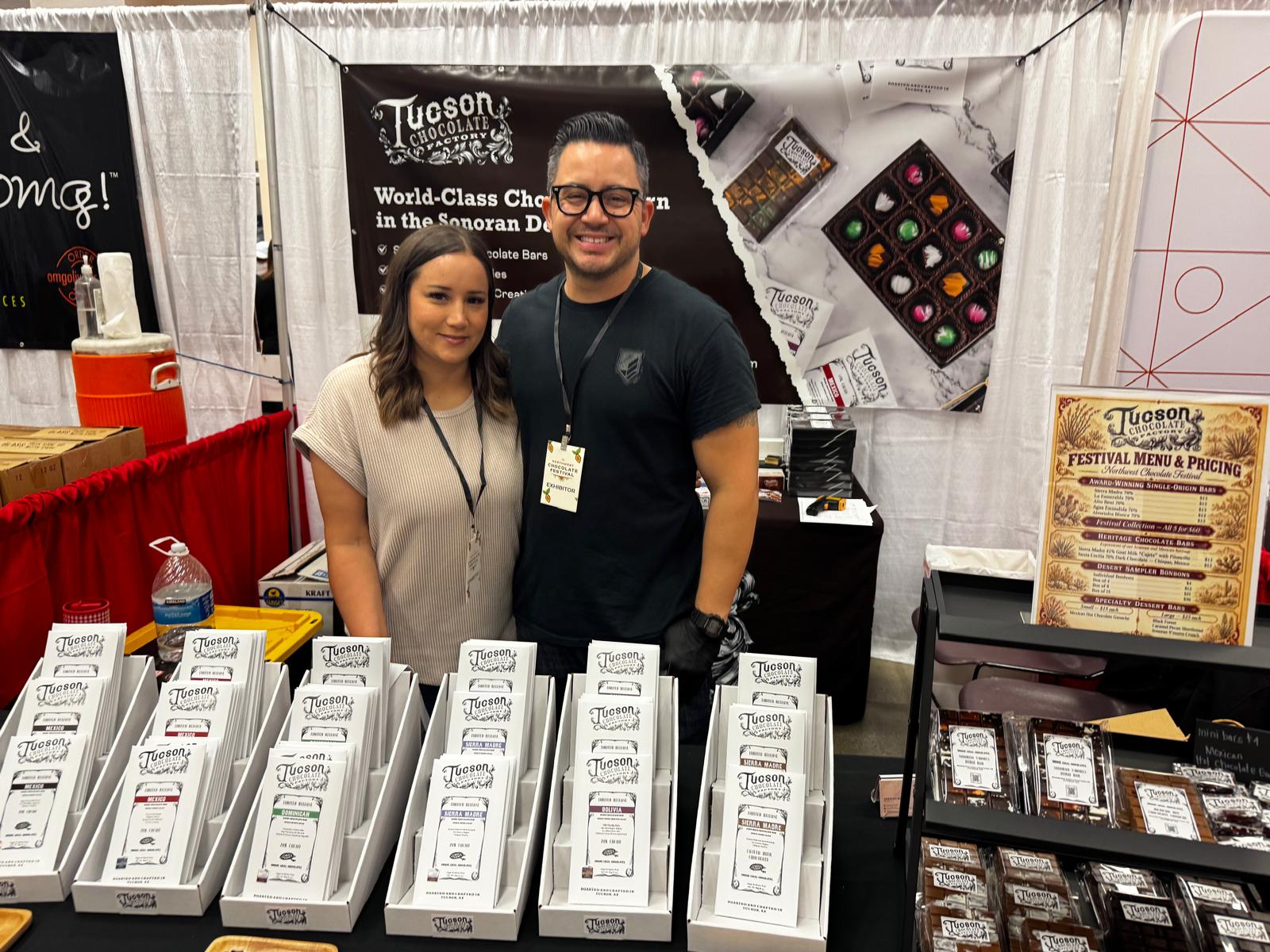
Armando and Denise at the Northwest Chocolate Festival in Seattle (photo by Jaclyn Palumbo)
On the Southwest Horizon…
Tucson Chocolate Factory changed considerably since Armando and Denise started it back in 2022. What started as caramels and bonbons at farmers markets, transitioned into crafting award-winning single origin chocolate, and then unexpectedly pivoted to adding game-changing viral chocolate products.
Today, they enjoy operating this wonderful retail shop on Tucson’s Historic 4th Avenue. I don’t think Armando senses exactly where TCF goes next, but I also think he’s very happy regardless.
“I expect the evolution to continue. We want to keep improving our single origin chocolate, exploring new cacao origins, working with local ingredients and producers, and finding new ways of expressing what chocolate can be. There is still a lot we have not explored yet, and that is probably the part I am most excited about.”
We wish Armando and Denise all the best and look forward to whatever new creation sprouts next, from deep in the heart of Tucson.
For more on Tucson Chocolate Factory, click here to visit their website, and click the links below to connect with them on social media as well.
Not Venturing to Tucson? TCF also participates in the Southwest Chocolate and Coffee Fest in Albuquerque, plus the Northwest Chocolate Festival in Seattle too.
Header image: Orange Zest Caramel Bon Bons (photo by TCF)