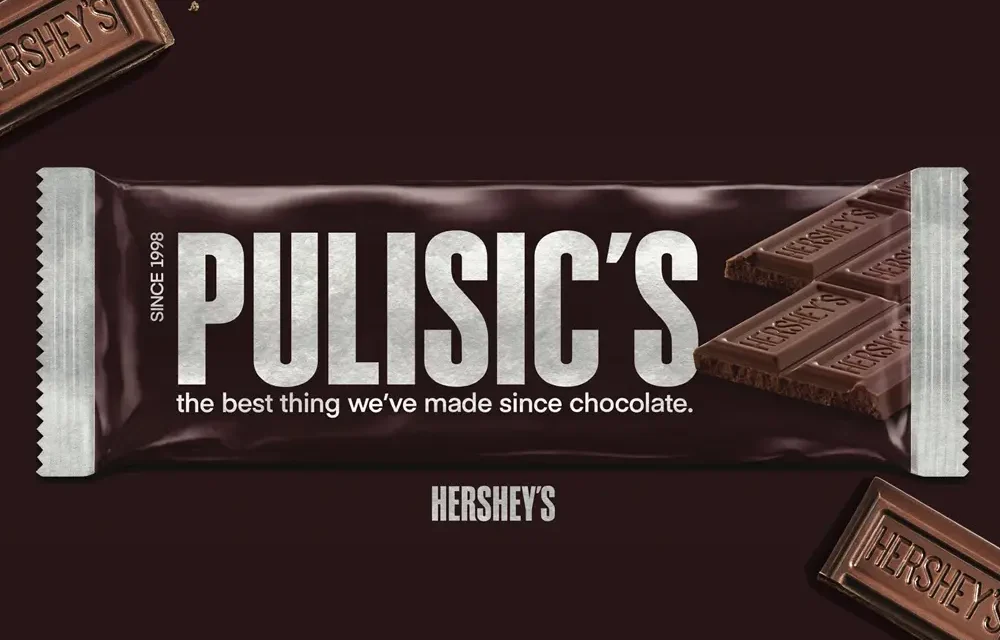
The Hershey Company announced a limited-edition Christian Pulisic chocolate bar this week, timed for the 2026 World Cup. Now we’re not known for covering BIG CHOCOLATE news, but this is a bit too heartwarming to pass up.
On the surface, this reads like standard celebrity endorsement theater: beloved hometown kid makes good on the global stage, hometown mega corporation capitalizes on the warm & fuzzy angle You know the playbook. But something about this particular move reveals something genuinely interesting about how legacy brands think about authenticity in an era where authenticity means more than ever.
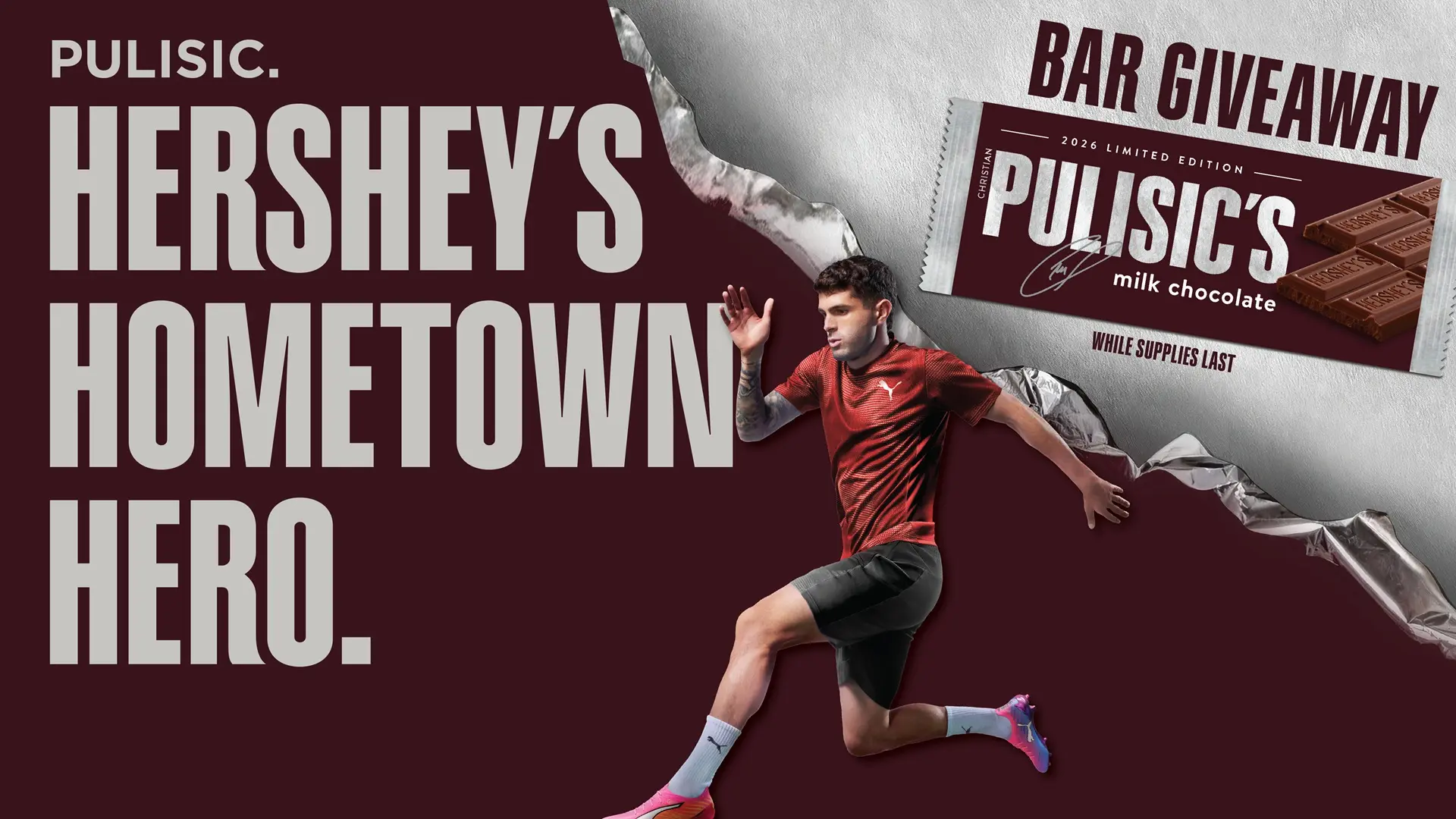
Image Credit: Hershey Chocolate World
The Thing About Coming Home
Here’s what made me pay attention: Hershey’s didn’t just slap Pulisic’s face on a bar and call it marketing. They actually collaborated with him, and the wrapper features his printed signature. The company is distributing 8,000 free bars — 5,000 at Hershey’s Chocolate World and 3,000 at the Times Square location — which is certainly a meaningful commitment.
They’re even hosting a multi-day pop-up in Philadelphia during the World Cup itself. This isn’t some pure licensing deal, it’s a structural investment in the narrative that Pulisic never left Hershey, PA, and Hershey never stopped claiming him.
The marketing language here is precise in a way that suggests someone actually thought about what makes this story work: “We love him because he’s one of us.” Not because he’s talented… not because he scores goals (he does, spectacularly, for AC Milan by the way)… but because he’s one of us. That’s the actual product being sold. It’s not chocolate, it’s belonging. Which is a great idea, because no offense to Hershey, but those chocolate bars? Yeah, not exactly for connoisseurs.
Why This Matters More Than It Should
Pulisic is a legitimate global superstar. He plays for one of Europe’s most prestigious clubs and will likely feature prominently in the 2026 World Cup – even more relevant since it will be hosted in North America for the first time since 1994.
Of course, with big chocolate, there’s usually an uncomfortable part: this play helps Hershey focus consumers’ attention on the local connection more than supply-chain ethics. They know that the feel-good story of a hometown hero returning to honor his roots will keep their mass market audience away from questions about cocoa sourcing, labor practices, and the environmental cost of industrial chocolate production.
I don’t say that accusingly — here at CC we know what’s actually happening. And Hershey knows too.
The free distribution strategy is shrewd. 8,000 bars costs them what, maybe $50,000 in product and logistics? That’s nothing for a company of Hershey’s scale, but it creates physical artifacts that people will keep, photograph, and share. That’s earned media in its purest form. Someone buys the bar at a stadium concession stand, gets it framed, puts it on Instagram with #HersheysPride. The algorithmic reach becomes essentially free.
Is Change Coming for Hershey?
For me though, the real question is whether limited-edition nostalgia can reshape Hershey’s brand perception in any meaningful way moving forward. The company’s core market has been eroding for years, as more discerning consumers gravitate toward premium chocolate, craft brands, and companies with clearer ethical positioning. A Pulisic bar won’t reverse that trend, but it might remind people why Hershey once mattered to them in the first place, which is a different kind of business objective.
Still, it’s inarguably yet another positive move for Hershey, who recently received the Inaugural Farmer Health Award at Chocolate Scorecard. It was a surprising win, and here’s a quick note on it:
“This award recognizes a company that understands caring for cocoa farmers means caring for their health — not only as a business strategy, but because it’s the right thing to do. “
The company still only scores a 49% on the scorecard (the best companies score in the 80s), so there is plenty of work to do, but we’re happy to give Hershey props this time not only for honoring their hometown hero Christian Pulisic, but more importantly, for finally honoring the farmers they purchase cacao from by providing some real support. Nice work Hershey, now just don’t stop there.
Featured Image Credit: Hershey Chocolate World